Canada Goose’s Chinese market success is an unlikely story – and a useful one. When Dani Reiss took over as CEO in 2001, the company was worth roughly C$3 million. By the time it opened its Beijing flagship in Sanlitun in December 2018, it had already grown into a publicly listed business. What happened next is the interesting part though: that risky China bet turned a respectable brand into a C$1+ billion company, with nearly 40% of its global store footprint on the mainland, and Greater China now accounting for around 36% of total global revenue.
The timing was, to put it mildly, audacious. The Beijing opening came weeks after the arrest of Huawei CFO Meng Wanzhou in Canada, which triggered a deep freeze in Canada-China relations (which is only just thawing a little now following Mark Carney’s visit in January 2026). Whilst most brands were keeping their heads down, Canada Goose opened a store.
The company achieved this by embedding authenticity and operational control into everything it does. Core down parkas remain 100% Made in Canada – a deliberate, non-negotiable signal of quality. Beyond that, it hyper-localised the customer experience: designer collaborations with Chinese artists, AR-enabled night shopping, late-night livestreaming on Douyin. It shifted distribution away from third-party wholesalers towards direct retail and a network of 150+ Key Opinion Leaders (KOLs). And when it made a serious compliance misstep in 2021, it moved quickly to fix it.
Today, Canada Goose is diversifying beyond cold-weather outerwear by launching sneakers, knitwear, and fleece with an eye on C$3 billion revenue by 2028.
So what does any of this have to do with food and beverage? Quite a lot, actually. “Made in Canada” becomes “sourced from trusted regions”. Hyper-localisation becomes flavour adaptation and festival packaging. Livestreaming parkas on Douyin and livestreaming specialty biscuits or infant formula are not as different as they might seem. Compliance is a hygiene factor and a brand asset simultaneously. And the “luxury shame” trend reshaping premium apparel has its counterpart in Chinese F&B, where health, wellness, and value-consciousness are redefining what premium means in terms of Chinese consumer behaviour.
A China strategy built on operational authenticity, hyper-localisation, digital control, and regulatory savvy is no less vital for milk powder or wine than for down jackets. If anything, given that food safety remains one of the most emotionally charged issues for Chinese consumers and regulators alike, the bar is higher.
Table of Contents
Timeline & Key Milestones in the Canada Goose China Market Entry
- 2018: Canada Goose opened its first Beijing flagship in Sanlitun, just as the Meng Wanzhou arrest froze Canada-China relations. A calculated gamble that marked China’s debut on the expansion roadmap.
- 2019-2020: Rapid rollout began. Even through COVID, Canada Goose continued opening China stores while competitors pulled back – there were four new stores in 2022 alone.
- 2021: Major setback. Chinese state media accused Canada Goose of applying a “double standard” refund policy and making misleading claims about the origins of their down. The company reversed course quickly, introducing a 14-day China return policy and issuing a public apology.
Lesson: regulatory gaffes trigger rapid, public backlash – state media’s warning that “all enterprises must abide by Chinese laws” was as much a signal to others as a reprimand. - 2022: 27 stores across Greater China (mainland, Hong Kong, Taiwan, Macau) – roughly 40% of the global footprint. By the end of 2024, Greater China was generating ~36% of total sales.
- 2023: Strategic pivot. Recognising slower luxury demand and milder winters, Canada Goose acquired a Romanian knitwear facility (its first non-Canada production site) and launched sneakers and fleece. A cost transformation programme cut around 17% of global white-collar roles.
- 2024: New stores in Nanjing and Macau. Douyin flagship launch drove measurable sales uplift. Q2 2024 saw a 5.7% revenue growth in Greater China even as North America softened.
Business Metrics
Store Footprint
The brand had over 70 stores globally by late 2024, with around 27 in Greater China – approximately 40% of the total. The China store count has grown roughly 20% per year since 2018, consistently outpacing the wider luxury sector’s footprint expansion.
Revenue by Region (FY2024)
Full-year FY2024 sales grew 9.6% to C$1.25 billion (Q4 alone up 22%). Greater China was the growth engine, with revenue up over 29% year-on-year, which represented around 32% of the total. North America (54% of sales) was flat to slightly down. The new Douyin channel contributed mid-single-digit comparable growth in the second half of the year.
Canada Goose’s growth in China stands in sharp contrast to steep declines at many Western luxury brands operating under identical market conditions during the same period.
Average Selling Price (ASP)
Premium imported parkas in China typically retail at RMB 8,000-15,000. Canada Goose sits at around RMB 7,960 average – comfortably above domestic premium brands like Bosideng (RMB 1,600-2,000) but well below ultra-luxury competitors like Moncler (around RMB 13,276). This places Canada Goose in a “premium mid-tier” that carries real strategic tension: it must maintain enough luxury credibility to justify the price premium over domestic brands while avoiding the perception of being too mainstream among genuinely affluent shoppers.
ASP figures are approximate. Sources: industry analysis, investor reports.
Inventory & Costs
By FY2025 Q4, inventories had fallen 12% year-on-year. A cost-cutting programme (covering software consolidation, supplier renegotiations, and SG&A reductions) delivered C$25 million in annual savings. These moves partly offset higher supply costs. In November 2024, Canada Goose surprised markets with a quarterly profit as leaner operations and strong China sales offset weakness in the US.
Authenticity and Supply Chain
Made-In Provenance
Canada Goose produces all their core down parkas across seven factories in Ontario, Quebec, and Manitoba. CEO Dani Reiss explicitly positions this alongside Swiss watch-making: the provenance is not a marketing add-on, it IS the product. In China, where “foreign equals premium” has ceased to be automatic, “Made in Canada” still signals quality and integrity – and it feeds into what analysts call the “repatriated luxury” trend, where Chinese consumers buy prestige goods at home but increasingly demand proof of origin rather than just a logo.
For F&B exporters, the parallel is direct. China’s consumers have long institutional memory of domestic food safety scandals and genuinely prize supply chain transparency. “German beer”, “New Zealand milk” or “Alpine-grazed butter” sell partly because they promise safety as much as quality. The task for exporters is to build that story actively using tools such as QR-code traceability, certifications (organic, non-GMO, protected designation of origin), and visible origin narratives – the Alpine farm, the artisan Belgian chocolatier, the single-origin coffee estate.
Geopolitics and Trade Risk Have to be Considered in any China Market Entry Strategy
The Canada Goose case is also a reminder that geopolitics cannot be planned away. Canada Goose relies on USMCA preferential terms to manage duty exposure; a US-China tariff escalation could reshape that quickly, as we’ve seen in the last couple of years. F&B exporters face the same volatility: import duties, expired free-trade agreements, and customs rule changes are a constant backdrop. Contingency planning matters. Cross-border e-commerce channels (which carry different HS code treatment under RCEP) and dual-sourcing strategies are both worth building into the plan rather than being improvised in a crisis.
As of today, European and Canadian exporters have found themselves in a somewhat more favourable diplomatic position with China relative to the US – but this can shift rapidly, and it is never wise to build strategy around the assumption of geopolitical goodwill.
Hyper-Localisation of Product and Experience for Chinese Consumers
China’s guochao (national pride) trend demands more than logos; it demands genuine local relevance & has become an integral part of Chinese consumer behaviour. Canada Goose’s approach involved 3 interconnected layers:
- Collaborations: Limited-edition collections with Chinese designers (most notably Angel Chen) reinterpreted Arctic aesthetics through a distinctly local creative lens.
- In-store experience: “Cold rooms” chilled to -25C gave shoppers the chance to test jackets in simulated blizzard conditions – turning retail into theatre while reinforcing performance credentials.
- Online-offline integration: Major city stores in Sanlitun and Shanghai featured AR window displays enabling after-hours “Night Shopping”: virtual mountain peaks unlockable by phone, merging livestream marketing with the physical brand environment.
These strategies combined make Canada Goose feel like a brand embedded in Chinese urban culture rather than just another imported label on a shelf.
F&B Parallels
Food brands face the same challenge on flavour, channel, and occasion, and the tools are analogous:
- Glocalised products: Adapting to local palates is not just about Chinese characters on the label. It means reducing salt and sugar to match local preferences, adjusting pack sizes for single-household consumption, and reformulating for texture expectations. Hello Kitty macarons in matcha and dragonfruit, IKEA’s plum-flavoured yogurt for Singles’ Day – these exist because someone did the work. (Episode 32 of International Expansion Explained covers exactly this kind of adaptation, with Lina Bartuseviciute describing how she guided a Lithuanian mayonnaise brand through product localisation for the Chinese market.)
- Experiential retail: Pop-up cafes, interactive tastings, Mandarin signage, red envelope mechanics, and whimsical local design elements all help signal that a brand has shown up properly & earned the right to “participate” in local culture. Starbucks Reserve in Shanghai is an obvious reference point, but even smaller food brands can execute this at a boutique level.
- Festival alignment: Ferrero & McDonalds make mooncakes. That is a clever cultural business decision. Special packaging for Mid-Autumn Festival, limited Lunar New Year editions, and occasion-led SKUs are standard tools in China and should be on every exporter’s roadmap.
The COO of Alibaba put it plainly: surface decoration is not enough. Brands must weave their products into Chinese lifestyles to achieve real Chinese market success.
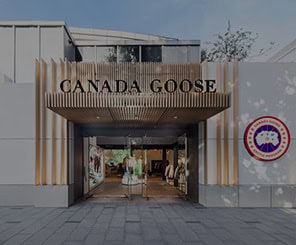
Photo (c) Canada Goose
KPIs to Track
Consider measuring: GMV during local shopping festivals (eg Singles’ Day, 618); share of region-specific SKUs in your total portfolio; footfall at immersive events; and local social engagement – WeChat followers, Xiaohongshu (Rednote) tags, Douyin UGC content. These are just examples (I can think of lots more if you have concrete questions 😉 )
Digital Channels and KOL Strategy
Direct-to-Consumer and KOLs
Canada Goose now sells through its own flagship store on Tmall and via a decentralised network of over 150 KOLs on Douyin. Crucially, it does not run a branded Douyin account – instead, it orchestrates an influencer ecosystem. Each KOL – whether a climber, fashion blogger, or tech reviewer – highlights specific product features in content that feels authentic rather than corporate. The result is product discovery that converts to purchase without the stiffness of typical branded advertising.
This matters because the line between discovery and purchase in China is intentionally blurred. Research suggests that around 90% of Chinese Gen Z buys imported products online, often after initial exposure via social media or livestreams. Brands without a structured digital presence cede that discovery moment to intermediaries. Canada Goose targets 70% of future revenue from DTC channels – higher margins and first-party consumer data are the strategic payoff.
What This Means for F&B Brands
Food brands must fight for the same digital shelf. The tactics translate directly:
- Official e-commerce presence: Set up flagship stores on Tmall and JD.com. HiPP and Arla both have Tmall portals; there is no reason smaller F&B exporters cannot do the same, at appropriate scale.
- KOL-led content: The F&B equivalent of “parka in a cold room” is “nutritionist tries our olive oil” or “chef unboxes this French cheese”. Even micro-influencer tasting events can drive meaningful awareness. The platforms to prioritise: Douyin, Xiaohongshu, and WeChat Channels but you need to customise the aesthetic for each one.
- Cross-border e-commerce as a testbed: For smaller brands, CBEC channels (Tmall Global, Kaola) can bypass lengthy registration requirements and provide a lower-risk route to test demand before committing to full market entry. It’s important to consider the implications of full market entry in your CBEC strategy though – otherwise future you will be cursing…
Channel Conflict and Pricing
One issue that gets underestimated: if you have mainland distributors, your DTC pricing strategy needs careful management. Undercutting partners through your own channels is a quick way to lose them and damage your route-to-market. Negotiate clear allowances upfront. Coordinating and enforcing your pricing policy across all channels is a critical factor in Chinese market success. (See my point about strategic alignment above)
KPIs to Track
Flagship store conversion rates; KOL engagement metrics (views, click-through rate); incremental sales uplift on livestream event days (not just Double 11); and regular monitoring of grey-market activity, which can signal demand your official channels are not capturing.
Compliance and Political Sensitivity
The 2021 Refund Policy Scandal
Canada Goose’s 2021 crisis is instructive. The China Consumers Association (a semi-official body) called out the brand for not matching its global 30-day return policy in China. State-run media (also within the context of poor China-Canada relations) turned it into a broader narrative about foreign brands treating Chinese consumers as second-class. Canada Goose moved quickly; introducing a 14-day return policy, issuing a public apology, and aligning its China policies with global standards. This rapid response stopped the spiral.
The lesson is not just crisis management (although that is key in China). It’s that in China, compliance is strategy from day one. Any policy gap – on returns, ingredients, advertising claims, or labelling – will eventually be found. Better to design for compliance than to retrofit.
Specific areas F&B exporters need to watch:
- Advertising claims: China’s advertising laws prohibit superlatives such as “best”, “No. 1”, or comparative puffery without supporting evidence. Canada Goose’s “best Canadian down” tagline was flagged as misleading. The F&B equivalent: you cannot claim “purest honey” or “No. 1 infant formula in Europe” without some kind of proof.
- Food safety and labelling: Every product must meet CNCA standards. Even fairly minor labelling errors (incorrect weight formatting, missing Chinese-language ingredients list) or discrepancies between the label and the product – can trigger a recall. This is non-negotiable.
Product recalls and media crises in China deserve their own dedicated post – the mechanics are genuinely different from Western markets, and the speed of social media amplification is extraordinary. What I will say here is: you need local professional agency support in place before a crisis, not after. And you need to move within hours, not days.
Political Dimension
Canada Goose is diplomatically careful. It promotes its Canadian-made credentials without commentary on bilateral relations and avoids any brand association that could be read as critical of Chinese government policy. F&B exporters should take the same approach. Campaigns promoting “freedom of choice” or partnering with public figures who have made critical statements about China can create problems that no amount of good product will resolve. Sustainability, health, and craftsmanship are safe positioning territories. Political adjacency is not.
Luxury Shame
Separately, Chinese affluent consumers are navigating a “luxury shame” shift. High-net-worth individuals are still buying prestige goods, but with more discretion. Ostentatious wealth signalling – think extremely expensive alcohol at VIP dining events – has become socially risky in certain contexts. For F&B, this means premiumisation is very much alive, but the framing needs to shift from status to substance: personal health benefits, provenance, craftsmanship, and community values rather than price tags and logos.
I read this as a sign of a maturing consumer class. Chinese affluent consumers increasingly do not need to prove their success through conspicuous consumption. Post-COVID anxieties and a changed economic mood play a role too – but the underlying shift towards understated, values-led premiumisation looks structural rather than cyclical.
Chinese Market Strategies: Pricing Strategy and Competition
Canada Goose faces a classic mid-tier squeeze. Its ASP sits well below Moncler’s, making it feel like affordable luxury to the genuinely wealthy, which is not always a comfortable position. Meanwhile, the rise of Chinese brands like Bosideng are attacking from below, with an aspirational premium positioning at roughly one-quarter of the price. The brand must continuously justify why it deserves to cost 4 times more than Bosideng without conceding ground to Moncler.
Between FY2022 and FY2023, Canada Goose’s average price rose just 0.5% while Moncler’s rose 18%. Moncler’s broader portfolio – womenswear, Stone Island, wider lifestyle categories – gives it more tools to drive aspiration. Canada Goose’s tighter positioning limits its ability to push prices upward. The response has been to introduce mid-price non-down items (raincoats, fleeces at roughly RMB 5,000-8,000) to broaden appeal without (hopefully) diluting the core brand.
| Brand | ASP (RMB) | Positioning | China Strategy | Key Risks |
| Canada Goose | ~8,000 | Premium outdoor-luxury | Strong DTC/retail (27 stores); authenticity and digital KOLs | Mid-premium gap; warm winters; geopolitical exposure |
| Moncler | ~13,000 | Ultra-luxury lifestyle | Flagship DOS; heavy e-commerce; strong social buzz | High-end segment dependency; slow-moving inventory |
| Bosideng | ~2,000 | Domestic aspirational | China-focused mass+premium; rapid store network | Brand elevation challenge; premium image dilution |
ASP and positioning are illustrative. Sources: investor reports, industry analysis.
For exporters, the strategic lesson is: decide your price tier and commit to it. China’s consumers are sophisticated and mobile – they trade up and down readily & mid-range ambiguity is punished. If you are positioning as premium, build the story, the hero SKUs, and the distribution to support it. If you are going for volume, compete on value and availability. Trying to occupy both spaces from a standing start rarely works.
Category Expansion and Lifestyle Pivot
Canada Goose is in the middle of a significant pivot. Non-down products grew to 46% of sales in FY2024 (up from 43%). Its first sneaker line, Glacier Trail, launched in 2023. The Romanian knitwear acquisition added an all-season production capability outside Canada for the first time.
The risk is brand clarity. Canada Goose built its equity on extreme-performance cold-weather gear. Convincing loyal customers that fuzzy fleeces and sneakers carry the same DNA requires sustained narrative investment. Early social media traction suggests it is achievable, but the margin & positioning risks are real – and worth watching.
F&B Parallels
The logic is identical for food brands. A “winter pumpkin soup” company cannot survive on seasonal demand. Diversification – a juice brand adding functional teas, a dairy company extending into yoghurts or ready meals – is necessary. The discipline is to maintain your brand DNA throughout. As Canada Goose’s category consultants have noted, the key is to expand within an aspirational lifestyle space rather than fragmenting across unrelated territories. For F&B, that might mean anchoring everything around wellness, family nutrition, or artisanal provenance… and only extending into adjacent categories that those anchors naturally support.
Gen Z and Evolving Consumer Trends
Chinese Gen Z and younger middle-class consumers are primary drivers of the brand’s Chinese market success, and they are not a homogenous group. Some patterns are worth highlighting:
- Values over logos: Authenticity, uniqueness, and social proof matter more than status symbols for many younger buyers. Canada Goose’s association with polar exploration, conservation, and Inuit arts resonates with this better than pure luxury positioning would.
- Digital natives: Around 90% of Chinese Gen Z buys imported goods online, often after social media exposure. Douyin and Xiaohongshu are where attention lives.
- Experience over ownership: Luxury for younger Chinese consumers is increasingly about emotional value and exclusivity – limited drops, immersive events, community belonging – rather than durable goods as status signals. For F&B, experiential marketing (brew-your-own-tea sessions, VR vineyard tours, foodie communities) can be a more effective entry point than traditional advertising.
Sustainability and Clean Credentials
Younger Chinese consumers are more engaged with sustainability narratives than they were five years ago. “Luxury shame” has accelerated this: conspicuous bling is out; mindful craftsmanship is in. Canada Goose’s ESG commitments – animal welfare standards, Inuit art partnerships, environmental positioning – likely help its image among this cohort. F&B brands can mirror this with clean labels, origin transparency, and genuine community stories. The key word is genuine: greenwashing is called out quickly on Chinese social media.
F&B Brand Parallels: An Insight Table
To make this actionable, here is how each Canada Goose strategic pillar translates for food and beverage exporters:
| Aspect | Canada Goose Insight | F&B Action |
| Supply Chain | “Made in Canada” signals authentic quality. | Emphasise sourcing origin – “Product of France”, “Alpine grass-fed”. Use QR-code traceability. |
| Compliance | Had to align returns and advertising to Chinese law. | Follow Chinese food laws strictly: ingredient registration, labelling, health claims. Pre-clear with local experts. |
| Localisation | Designer collabs; tailored styles; cultural themes. | Adapt flavours, pack sizes, and occasions. Local languages in marketing. Festival editions. |
| Experience | Cold rooms, AR windows, immersive retail. | Tasting stations, pop-up cafes, interactive online tutorials, festival alignment. |
| Channel Strategy | 70% DTC target; KOL livestreaming over distributor dependence. | Blend DTC e-commerce (Tmall, JD) with select distributors; embrace mini-programs and Douyin livestreaming. |
| Influencer/Livestream | 150+ KOLs highlighting product features authentically. | Partner with food-adjacent KOLs (chefs, dieticians) for live cooking demos, tastings, unboxings. |
| Pricing | Avoid mid-tier ambiguity; commit to premium or volume. | Set distinct product lines. Use psychological pricing (8-endings, bundles) to reinforce positioning. |
| Inventory/Data | AI forecasting cuts unsold stock 12%. | Forecast seasonal demand (Spring Festival, Singles’ Day). Apply JIT logistics; manage cold chain for perishables. |
Exporter Summary: 8 Steps to Chinese Market Success
- Prove Your Origin: Certify your supply chain. Every premium claim needs documentation.
KPI: % of SKUs with traceable codes & use these also for marketing narratives - Tailor Products to China: Adapt flavours, packaging, and occasion alignment for the market.
KPI: Revenue share from China-specific SKUs. - Build Omni-Channel Presence: Official flagship stores on Tmall and/or JD, supplemented by cross-border e-commerce where registration is not yet in place.
KPI: Share of sales via official channels. - Engage KOLs and Livestream: Work with food-adjacent influencers for live demos and taste-tests. KPI: Viewers, engagement rates, and sales uplift per livestream event.
- Set Clear Price Tiers: Position premium or volume lines distinctly – avoid the middle.
KPI: ASP vs. competitors; margin on hero SKUs. - Comply Aggressively: Pre-clear all labels and advertising claims with local regulatory experts before launch.
KPI: Compliance-related incidents; recall events. - Leverage Data: Forecast demand by region and season; optimise inventory to China’s promotional calendar.
KPI: Inventory turnover days; stockouts during peak events. - Monitor Politics and Trends: Track policy shifts ( esp. tariffs, import rules under RCEP) and consumer sentiment regularly.
KPI: Crisis-response capability; social sentiment score.
Each of these steps requires investment in local expertise – regulatory, cultural, and digital. The payoff is resilience. Brands that act local operationally are better positioned when trade conditions shift, as they inevitably do.
The gourmet and premium food sector is full of stories of foreign brands failing in China – missteps over labelling, expired licences, cultural miscalculations, food safety crises. Success stories are genuinely rare, which is why Canada Goose is worth studying carefully.
Its China story of building real market presence through a diplomatic crisis, weathering a regulatory backlash, and continuing to grow while luxury competitors retreated – is the result of deliberate strategic choices: operational authenticity, hyper-localisation, digital control, regulatory discipline, and a willingness to adapt category by category and season by season.
None of those things are exclusive to outerwear. For F&B exporters, the message is straightforward: China rewards brands that commit fully, localise genuinely, and build for compliance from the start. Treating any of those as optional extras is how brands end up with expensive warehouses, frozen registrations, and a cautionary tale to tell.
The market is complex and genuinely demanding. It is also one of the most significant consumer opportunities on the planet. Canada Goose bet on it at the worst possible diplomatic moment and built something durable, proving that it can be done as long as you have the right China market entry strategy.
Thinking that working with a consultant would accelerate your international expansion?
If you’d like to learn more about working with me for support on your internationalisation projects or personal export knowledge, you can book a 30 minute international clarity call here.
If you haven’t already signed up for my free e-book about how to select which international market to enter next, you can do so here, or using the form below.
If you enjoyed this content please share it on social media or recommend it to your network.
Pin this post for later!
If you are interested in selling in China, you might also find these posts interesting:
- Successful Selling in China Part 1: The Background
- Successful Selling in China Part 2: Do the Due Diligence
- Successful Selling in China Part 3: Building Guanxi for Success
- China Challenges Part 1: Underestimating China
- China Challenges Part 2: Understanding Chinese Business Culture
- China Challenges Part 3: Keeping up with “China Speed”
- China Challenges Part 4: Finding the Right Partner
- China Registration Regulations for Overseas Food Manufacturers from 2022
- New Trends in China, new Opportunities in Trade
- Top Basic Concepts of Cross Border E-Commerce in China
- Alberto Antinucci: Preparing the Best Market Entry Strategy
- Julia Bingel: Top Tips for Entering the Market
- Laura Cortes: Custom Product Development and Sourcing
- Food and Beverages Trends You Should be Evolving with
- A Sweet Business Opportunity? Entering the Chocolate market
- Get the Scoop on the Ice Cream Market in China
Marketing in China:
- What is Zhihu? How can you use this for your B2B Marketing in China?
- Have you thought about using Kuaishou for China Marketing?
- Using Bilibili marketing in your China Strategy
- Livestreaming driven social commerce in China as the future growth engine?
- Leverage Toutiao’s AI to target Chinese consumers for your brand
- What are the Differences between Douyin & TikTok?
- How Double 11 online shopping festival evolved in 2022
- Trends to Focus on in Chinese Consumer Behaviour
- China’s Pet Market Trends & Consumer Behaviour
- Strategies for Successful CNY ads
- Chinese Marketing Calendar for the Year of the Dragon
- Analysing the Phenomenal Success of Jellycat in the Chinese Market
Other relevant posts:
- The 2022 Beijing Winter Olympics: Sustainable & Digital
- A Short Guide to Navigating the New China Data Privacy Laws
- Lunar New Year Traditions around Asia
- What is the story of the Chinese Zodiac Animals?
- Year of the Tiger 2022: what can you expect working with Tigers?
- 2023 Year of the Rabbit Characteristics: what is your benmingnian year?

Kathryn firmly believes that business is done between people, and therefore places her focus on building strong relationships that form a solid foundation for doing business.
When she's not travelling around the world, Kathryn enjoys playing clarinet in her town's wind orchestra or sharing her love of the outdoors with her Scout group.