
If you are about to begin marketing in South Korea, remember that you are looking at one of the most sophisticated, fast-moving, and frankly unforgiving consumer markets in the world.
On paper, it is enormously attractive. South Korea’s digital marketing market is projected to reach over USD 31 billion by 2035. It is hyper-connected, trend-driven, and culturally influential far beyond its borders. Korean consumers are early adopters, digitally native, and deeply engaged with brands.
There’s another side to all this though.
This is not a market you “enter” with a lightly adapted global export model. It IS however a market that forces you to rethink how you show up, how you sell, and how you build trust.
The practical implication is this: Korea is a high-cost market to test badly. Customer acquisition costs are high, timelines are compressed, and poor localisation doesn’t fail slowly, it fails fast and visibly.
The common trap I still see is this: brands assume that because Korea is modern, globalised, and digitally advanced with a young cosmopolitan workforce, it will behave like a Western market with a few tweaks.
Wrong.
The real thesis for success is simple (but of course not easy), and it came through very clearly in my interview with Hyein Yoon for episode 34 of International Expansion Explained:
Winning in Korea requires transformation, not translation. Marketing in South Korea equates to localisation strategies for South Korea and every decision should flow from Korean consumer habits and preferences!
That applies across everything from your product proposition to your digital channels to your customer journey.
In practice, this often means abandoning global brand consistency in favour of local relevance, something many HQ teams resist. The brands that win in Korea are usually the ones willing to flex more than feels comfortable.
Table of Contents
A quick Intro of Hyein

Hyein Yoon is a globally recognised marketing expert, content creator, and founder of HY Marketing. Her journey began in 2017 when she won 1st Prize for the Gyeongui Line Book Street Promotion in South Korea. She’s since worked as a freelancer, content manager, and project manager for the Women’s Human Rights Institute of Korea, collaborating with platforms like Google and Facebook to master SEO and social media algorithms.
In 2020, Hyein transitioned fully to freelancing, building HY Marketing with a global team of native-speaking marketers across Japan, South Korea, and English-speaking markets. Her agency won 1st Prize in the 2022 Goyang City DreamMaru Grant Competition, and she was named one of South Korea’s Top 10 Global Women CEOs in 2024 (@Global Woman Leader). A member of The Social Clique by Rachel Pedersen, Hyein thrives on challenges, believing mindset is the key to success.
Understanding the “Pali-Pali” Consumer Mindset
If you take one cultural concept seriously, make it this: pali-pali.
It loosely translates to “hurry hurry”, although that barely scratches the surface. It is not impatience. It’s more an expectation of efficiency as the baseline.
Speed is not a differentiator in Korea
South Korean consumers expect speed not as a differentiator, but as a given.
Platforms like Coupang have set the benchmark with “Rocket Delivery”, offering same-day or even four-hour delivery in urban areas.
This has two immediate implications for you:
- Your logistics model needs to match expectations, not just be “acceptable” or heaven forbid “clunky”
- Your communication and response times must be near-instant
Slow responses, delayed fulfilment, or unclear delivery timelines are deal-breakers & not the minor friction points they might be in Germany or New Zealand.
High value-for-money is non-negotiable if you are exporting food and drinks to South Korea
Korean consumers are not simply price-sensitive. They are above all value-sensitive.
That means they expect:
- High product quality
- Impeccable packaging
- Strong after-sales service
- A clear brand story
And they expect all of this consistently.
If you position yourself as a premium brand, you must deliver premium quality at every single touchpoint. If you position yourself as accessible, the value proposition must be immediately obvious.
There is very little tolerance for just “good enough”. In practice, this means mid-market positioning is often the hardest place to sit. You are neither distinctive enough to justify a premium, nor competitive enough on value to win on volume.
You are not just competing with other imported brands. You are competing with highly sophisticated local players who understand the consumer instinctively and move faster than most global organisations can react.
The Solo Living Shift impacts your marketing in South Korea
One of the most commercially important trends in recent years is the rise of single-person households and the culture of honbap (eating alone) or honsool (drinking alone).
This is particularly pronounced among Gen MZ (Millennials and Gen Z), and it is reshaping consumption patterns:
- Smaller pack sizes on shelf
- Convenience-led formats (South Koreans work really long hours so convenience is key)
- Personal indulgence products
- Strong visual appeal for social sharing
For food and beverage brands in particular, this intersects directly with food distribution channels in korea, where convenience stores, premium grocery delivery, and curated online platforms are outperforming traditional retail in certain categories.
If your product is designed for family consumption only, you are already misaligned to some extent, and should consider options such as adding additional pack sizes or freshening up your marketing approach. If your production setup cannot accommodate smaller formats without destroying your unit economics, you need to solve that before market entry, not after.
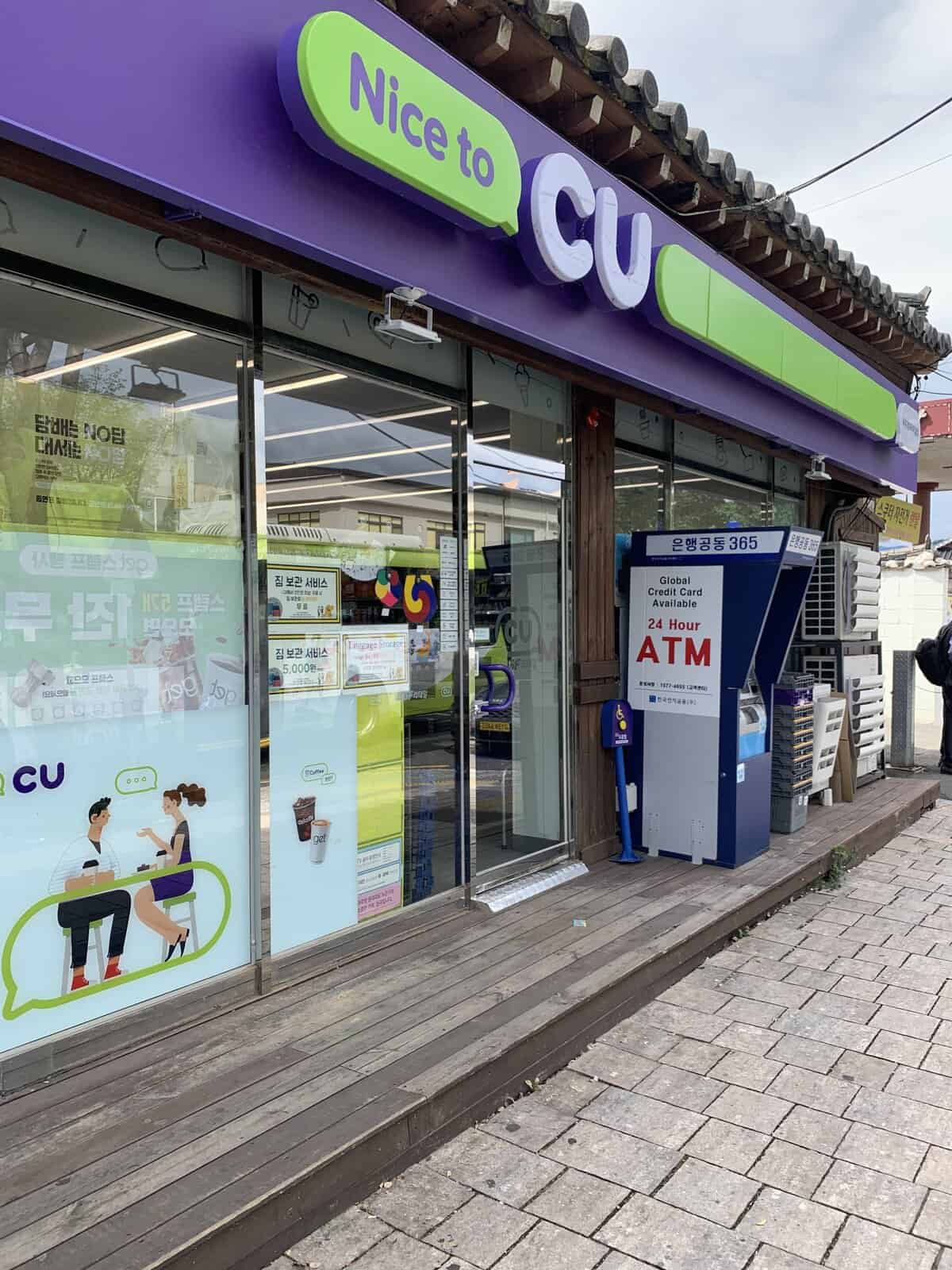
Navigating the digital ecosystem is important for cracking Korea’s food and drinks market
One of the fastest ways to fail in Korea is to apply a Western digital playbook 1:1. This is where many brands underestimate the complexity of marketing in South Korea. And whilst South Korea is in no way comparable to China (you can find Western social media and apps in Korea) the consumer preferences often run to the local candidate.
Country of origin still carries significant weight & European products often benefit from a premium perception, but that alone is not enough. You need to actively translate that origin into a compelling reason to buy.
The Search Landscape: Naver marketing vs Google
While Google has gained ground, the Korean digital ecosystem is still heavily shaped by Naver. Naver long dominated Korean search (historically over 50% of search traffic), but as of late 2025 Google took the lead. In September 2025, Google surpassed Naver (Google ~50% vs Naver ~40% share).
Naver isn’t just a search engine. It’s an entire content ecosystem:
- Blogs
- Cafés (community forums)
- Shopping
- Knowledge Q&A
A proper Naver marketing strategy is not about ranking a website. It is about owning multiple touchpoints within the Naver ecosystem.

Consumers don’t simply search and click. Instead they:
- Read blog reviews
- Browse community discussions
- Compare products within Naver Shopping
- Validate social proof of products before purchasing
If you are not present across at least some of these layers, you are effectively invisible.
You can see from the statistics above though, it’s not enough to simply rely on Naver marketing, you also need to follow the Google requirements to maximise your presence. Use Naver SEO (keyword tools, blog posts, café engagement) and Google ads/SEO. You need to know that Naver offers unique content channels (blogs, cafés, clips) built into its search engine, whereas Google relies on traditional website presence. Your strategy should cover both – optimise for Naver to reach homegrown users, while also maintaining visibility on Google for English-speaking expats and younger users. (Remember that Korean society is rather ethnically homogenous though – only around 5% of the population are immigrants).
Most Western brands overinvest in Google early because it feels familiar. In Korea, that is usually the wrong instinct.
If you’re entering Korea with a limited budget, prioritise Naver Blog and Café presence before investing heavily in Google Ads. Google will give you visibility, but Naver will give you credibility.
Messaging as Infrastructure: Kakaotalk marketing strategy
If there is one platform you cannot ignore if you’re exporting food and beverages to South Korea, it is the super-app KakaoTalk.
Used by around 90% of the population, it functions as:
- Messaging platform
- Payment system
- Shopping channel
- Customer service hub

A strong KakaoTalk marketing strategy includes:
- Branded channels for direct communication
- Automated customer support
- Exclusive promotions
- Integration with e-commerce journeys
Think of it less as a messaging app and more as your CRM, loyalty programme, and customer service desk all rolled into one.
Because Kakao is so pervasive, it’s essentially a daily utility: losing presence there is like ignoring e-mail in the West. Please note that advertising on Kakao often requires a Korean corporate entity or local agency partnership though…
Where you actually sell matters more than how you market
The Korean e-commerce landscape is fragmented but highly sophisticated.
- Coupang
The closest equivalent to a Korean Amazon, but faster and more deeply integrated into daily life. Coupang boasts ~20 million active users (about 40% of Koreans) and dominates through its logistics (Rocket Delivery and Rocket Fresh groceries). A global brand must treat Coupang as a primary channel: listing products there isn’t enough – you need targeted marketing (ads, promotions, coupons) to stand out.
As an overseas brand, you also have the option to sell on their “global” platform offering you cross-border sales into South Korea without having a local presence - Naver Shopping
Naver Shopping seamlessly integrates with the Naver search engine, letting users search and buy without leaving the site. Brands can use Naver Pay, sponsored product listings and banner ads on Naver Shopping. The advantage is a built-in high-intent audience; the downside is Naver’s complex rules (often necessitating a local agency to navigate). Still, ignoring Naver Shopping means missing a huge pool of domestic consumers. - Market Kurly
A premium grocery platform known for overnight delivery and curated assortments.
Kurly has grown rapidly (10 million registered users) by targeting single professionals who value quality ingredients. It’s not mainstream grocery, but if you’re in food/beverage or gourmet products, Kurly is crucial. Its success is attributed to convenience (overnight shipping) and a curated selection. For any D2C food brand, consider launching on Kurly and emphasising freshness and lifestyle fit.
Each of these platforms serves a different consumer mindset. Aside from these, other platforms exist (SSG, Gmarket, 11Street, auction, local deal sites like TMON, and food delivery services like Baedal Minjok) but the three above are the pillars. Plan to list on Coupang and Naver at a minimum, plus explore Kurly if relevant.
The real challenge is not access to these platforms, it’s prioritisation. Most brands underestimate how resource-intensive it is to manage even one of these channels properly, let alone three. Trying to be everywhere too early is one of the fastest ways to burn budget in Korea.
Content Strategy: The Visual and the Viral
Korea is one of the most content-saturated markets in the world, meaning that attention is not just scarce. It is brutally contested at every turn and what seems familiar isn’t to 100% because the platforms and norms differ from the West. Your content strategy has to be localised by channel.
Instagram and YouTube: The Lifestyle Engines
Platforms like Instagram and YouTube are essential for:
- Brand discovery
- Trend formation
- Lifestyle positioning
This is where your brand becomes aspirational.
These global platforms are hugely important for Korean Millennials and Gen Z. Instagram is especially popular with young urbanites for lifestyle, fashion, beauty and food content and posts tend to be highly polished and aesthetic. Micro-influencer campaigns on Instagram can yield strong engagement.
YouTube in Korea is not just entertainment; it’s also a prime product research channel. Many Koreans watch tutorials, reviews and unboxings on YouTube before buying.
Key point: influencer and video content must feel authentic. Korean audiences value trust and often follow personality-driven creators. For both channels, local creators (with Korean language and cultural insight) are far more effective than trying to repurpose foreign content.
It is not enough to “be present”. Your content must feel native to Korean visual culture.
That means:
- Clean, high-production visuals
- Strong aesthetic consistency
- Clear emotional hooks
This is also where many European brands underestimate the required investment. High-performing Korean content is not just localised, it is produced to a different standard, often requiring local creative teams rather than simple adaptation.
The Short-Form Explosion
Short-form video dominates social digital marketing right now.
Formats like:
- Naver Clips
- YouTube Shorts
- Instagram Reels
- TikToks
are designed to capture attention within one to three seconds.
This has two implications:
- Your content must communicate instantly
- Your brand cues must be recognisable immediately
(Long-form storytelling still has a role, but it is rarely the entry point.)
Brands should create snackable content (product demos, quick tips) tailored for mobile viewing. Crucially, on Naver Clip you can link directly to product pages or smart stores, creating a seamless funnel. In practice, a short-form video can go viral and immediately drive search or shopping actions (as one Korean campaign showed a spike from zero to 3,500 Naver searches after a short video ad).
Naver Blog and Café: The Hidden Power Layer that differentiates Naver Marketing
While global brands often focus on social media, Naver Blog and Café remain critical.
These are:
- SEO engines within the Naver ecosystem
- Community hubs for niche audiences (something similar to sub-reddits)
- Trust-building platforms
“Power Bloggers” and active Café communities often have more influence on purchase decisions than traditional advertising.
Naver Blogs are the equivalent of Google SEO: blog posts often rank at the top of Naver search and strongly influence purchase decisions. Brands should publish regular blog content (product reviews, how-tos) or partner with “Power Bloggers” who write keyword-optimised posts. Posts on Naver Blog tend to be image-heavy and keyword-rich.
Ignoring them (or underestimating their possibilities) is a mistake I see repeatedly.
Influencer Marketing South Korea: Trust vs Traps
If you are investing in influencer marketing South Korea, you are entering one of the most effective, but also most complex, channels because influencers in Korea are not just amplifiers – they are interpreters.
They help consumers navigate an overwhelming number of choices and act as trusted filters.
A 2025 InterAd study notes that Korean consumers rank influencers (known as KOLs) as trusted sources of brand info, with 71% likely to buy from a social media reference. However, navigating influencer marketing requires care:
KOLs bridge the “confidence gap”: In today’s market, Korean consumers face a glut of information. Google’s digital trends report calls this the “confidence gap” where buyers become anxious about choices and look for trusted signals. KOLs fill that role. As one analyst put it, Korean influencers “dominate public perception” of products and can sway it positively, turning exposure into genuine trust. In other words, a good influencer endorsement doesn’t just get eyes on your brand – it can build credibility and loyalty. For foreign brands, this trust-building function of influencers is crucial. Work with influencers who truly understand your product niche, and consider long-term partnerships (giving them time to tell a story) rather than one-off posts.
Key Opinion Leaders help bridge that gap by:
- Curating choices
- Providing context
- Offering reassurance
Watch out for fraud: Fake followers and bots are a real problem. Even local agencies sometimes miss fraudulent influencers. Use vetting tools (e.g. Social Blade, GRIN) and closely inspect engagement rates. Do not assume a large follower count equals impact. As Hyein Yoon warns, even big agencies struggle with this. Always demand audits or use platform tools (some agencies compile “brand connect” lists, as Naver now does, to help filter real influencers).
Power of micro-influencers: Korea has a tremendous network of mid-level influencers who are very effective. A great example is the NUSE cosmetics launch: instead of one big TV commercial, NUSE ran a massive campaign of hundreds of micro-influencers, creating buzz on par with a big ad spot. Micro-influencers often have highly engaged, niche audiences. Especially for consumer products, a coordinated micro-campaign can spread awareness quickly and feel more authentic than a single big-name endorsement.
This aligns very closely with what I’ve seen across other Asian markets, but Korea takes it further: scale matters less than density of influence.
Rather than relying on one or two big names, brands are:
- Activating dozens or hundreds of smaller creators
- Building momentum across multiple niches
- Creating a sense of organic buzz
If you choose the right partners, they become an extension of your brand.
Strategic Case Study: The Costco Shortcut
To illustrate these strategies, consider a recent success story from Korea. An Australian brand with no prior presence in Korea and a very limited budget managed to break through quickly by targeting a niche channel.
- Zero brand awareness
- Limited budget
- No established distribution
The Strategy
Instead of trying to go broad, they focused narrowly:
- Targeting Costco-specific Naver Cafés
- Engaging niche family influencers
- Building relevance within a specific retail context
The Result
- 4.5 million views
- Over 5x ROI within two months
The lesson here is not “use Costco”.
It is this:
A very concentrated, locally tuned campaign delivered television-level impact at a fraction of the cost. Focused local tactics can outperform broad ones. By partnering with Korean micro-influencers and engaging niche communities, the brand created big buzz without a big budget.
This post focuses very strongly on ecommerce, but despite its digital dominance, Korea remains highly responsive to physical retail experiences. Pop-ups, in-store tastings, and department store activations are still powerful tools for building trust quickly.
Emerging Trends for 2026 and Beyond
Looking ahead, a few trends will shape the Korean market:
Loyalty Reset
Koreans are in the midst of a “loyalty reset”. After years of sticking to familiar brands or channels, consumers are now experimenting with new vendors and ways to shop. For example, shoppers might try a new online store or a foreign brand they heard about on social media. This is partly due to economic uncertainty and partly due to more information and options. The upshot: new entrants have a historic opportunity. Korean consumers want fresh alternatives, but it also means market share is volatile.
You should capitalise on this by emphasising novelty and convenience, and by making trial risk-free (promotions, samples, easy returns).
AI-powered personalisation
Advanced AI is rapidly entering marketing and search in Korea. Naver and Google are embedding AI into search summaries and ads. More importantly, AI tools now allow marketers to hyper-personalise content and product recommendations. Instead of showing everyone the same banner, AI can tailor ads based on a user’s past behaviour, location or even predicted preferences. For example, young female shoppers might see beauty tips, while an older consumer sees health product suggestions. As the confidence gap widens, this personal touch will be key: Google’s research suggests that AI-driven personalisation can close that gap by improving the consumer experience. Korean brands are already using AI for chatbots, product design and targeted content; foreign brands should follow suit with AI analytics and dynamic content systems.
Other shifts
Koreans continue to value wellness post-pandemic, so health-oriented products and fitness tech are growing. The country’s aging population is also opening some sectors to foreign products (supplements, healthcare). And mobile commerce remains king – all digital campaigns must be mobile-first.
Your Action Plan for Korea
In Korea, focus isn’t just strategic, it’s operational. Spreading across too many platforms dilutes algorithm performance and influencer impact. Don’t spread yourself thin across Asia either – master one market at a time. As Hyein advises: go “all in” on Korea with a dedicated team or agency before moving to other countries.
- Focus is key: Choose Korea specifically (even if you plan other Asian markets later) and allocate the attention it deserves. Koreans will notice if your campaigns feel half-hearted or imported.
- Partner locally: Work with Korean experts. A local marketing agency or in-country manager can navigate Naver, KakaoTalk and Coupang rules, spot cultural nuances, and optimise content tone and formality. They bring the platform knowledge and language skills you likely lack. Remember: an English-speaking campaign will rarely perform well as-is on Korean platforms.
- Practical steps: Begin with Korean market research (consumer surveys, focus groups) and a Naver SEO/audit. Set up Naver Blog and apply for Kakao Channel. Adapt your product packaging/branding to Korean tastes. Plan a launch campaign around local events or festivals (e.g. Chuseok, Christmas, Seollal) using local celebrities or influencers. Always track local metrics (Naver clicks, Kakao impressions) rather than relying solely on Facebook/Google data.
With the right cultural insight and targeted tactics, global brands can crack the K‑Market. It will take effort and some trial-and-error, but the rewards are substantial. As one Korean marketing expert put it, Korea “represents enormous opportunity” – but only if you respect its local dynamics. Start small, lean on local partners, and let the market’s speed and creativity guide your strategy.
The full discussion
Marketing in South Korea is not easy, but it is one of the most rewarding markets if you approach it properly. It forces you to sharpen your thinking, elevate your execution, and truly understand your consumer.
Be prepared for higher customer acquisition costs than in most European markets. Between platform fees, influencer spend, and promotional expectations, Korea is not a low-cost test market. It is a high-investment, high-feedback environment, especially with the Korean Won remaining weak and geopolitical uncertainty.
Korea rewards brands that are willing to commit properly. If you are looking for a low-risk, low-investment test market, this isn’t it. But if you are prepared to invest, adapt and move at speed, it can become one of the most strategically valuable markets in your portfolio.
To watch the full discussion between Hyein and myself:
You can contact Hyein here:
- LinkedIn: https://www.linkedin.com/in/thehyeinyoon/
- Website: https://hyeinyoon.com/
- Other socials : https://beacons.ai/thehyeinyoon
Thinking that working with a consultant would accelerate your international expansion?
If you’d like to learn more about working with me for support on your internationalisation projects or personal export knowledge, you can book a 30 minute international clarity call here.
If you haven’t already signed up for my free e-book about how to select which international market to enter next, you can do so here, or using the form below.
If you enjoyed this content please share it on social media or recommend it to your network.
Pin this post for later!
If you are interested in doing business in South Korea, you might also find these posts helpful:
- A guideline to entering the food and beverage market in South Korea
- Finding the right importer
- Understanding Consumers
- Entering the Korean Market by Selling on Coupang Global Marketplace
- Why Optimising Naver blog posts pays off
- International Customer Service in Korea: Dealing with Media Crises
Culture:
Lunar New Year Traditions around Asia

Kathryn firmly believes that business is done between people, and therefore places her focus on building strong relationships that form a solid foundation for doing business.
When she's not travelling around the world, Kathryn enjoys playing clarinet in her town's wind orchestra or sharing her love of the outdoors with her Scout group.