
There’s a scene playing out on every subway, in every lunch queue, and in every elevator bank across China right now. Someone is watching a drama. Not a film, not a Netflix-type series. A vertical-screen, one-to-three-minute episode packed with more plot twists per minute than most Hollywood films manage in two hours.
This is the micro-drama (known in China as duanju) and developing a clear micro-drama marketing strategy is quietly becoming one of the most significant challenges facing international consumer goods brands that I have encountered in my 3 decades working in international trade. If you’re selling consumer goods into China, or planning to, this isn’t a trend you can afford to observe from a distance.
Table of Contents
From Niche Format to Economic Pillar
The numbers are hard to ignore. In 2024, China’s micro-drama market generated revenues of 50.44 billion RMB – surpassing the entire traditional film box office for the year. By 2025, that figure reached 100 billion RMB, with a user base of 696 million people. That’s more than 70% of China’s entire internet population watching this format.
To put it plainly: micro-dramas are no longer scrappy internet content. They are a stabilised, regulated, economically significant industry that now rivals conventional entertainment in scale and outpaces it in growth.
The format itself is deceptively simple. Episodes run for one to three minutes, shot in the 9:16 vertical orientation optimised for mobile, with a plot twist or emotional hook every few seconds. The industry nickname for this is “emotional takeout” because it’s fast, satisfying, & designed to fill the gaps in a busy day. Another term doing the rounds is “digital pickles”: a light, addictive accompaniment to daily life. I find the terminology slightly absurd but the revenue figures are harder to dismiss.
Who Is Watching – and Why It Matters
One of the most common mistakes international brand managers make when they first encounter micro-dramas is assuming this is a purely young, urban, digitally-native audience – and therefore a niche one. The reality is more complex.
Yes, commuting office workers are a core demographic. But so are migrant workers filling downtime between shifts & older viewers in the “silver economy” too. Micro-dramas have achieved genuine mass consumption across income levels, age groups, and geographies precisely because the format slots into “fragmented downtime” rather than demanding a dedicated viewing session.
The psychological pull is worth taking a few minutes to understand. In a high-pressure, fast-paced society, these shows function as what researchers have called “psychological massages.” They provide immediate emotional relief, be that catharsis, fantasy, tension and release, in a three-minute window. The format isn’t competing with long-form content (I was going to say television, but that’s too limiting). It’s filling a completely different need, and it is doing so with extraordinary efficiency.
For brand strategists, this has a critical implication: the attention is real, and it is intense. Unlike passive background viewing, micro-drama audiences are genuinely engaged. They are leaning in, not scrolling past and that means you need a micro-drama marketing strategy!
The Economy Behind the Screen: A Duanju Marketing Guide to Scale
One aspect that rarely gets discussed in Western coverage of this topic is that micro-dramas are not just a marketing channel. They are a substantial employment ecosystem, and understanding that scale is essential context for any company considering investment in the space & engaging micro-drama for brand strategy.
According to the Peking University National School of Development’s 2025 industry report, the sector directly supports approximately 690,000 jobs in China – 450,000 in production crews (screenwriters, directors, cinematographers, post-production staff), 32,000 professional actors, and over 207,000 extras. If you apply the industry’s indirect employment multiplier of 1.95 then the total economic footprint reaches 2.03 million jobs, with spillover into hospitality, equipment rental, logistics, and e-commerce.
Three cities have emerged as the industry’s production capitals. Hengdian – already famous as China’s “Hollywood” for period film production – dominates costume-based micro-dramas, hosting nearly 90% of China’s historical productions by leveraging its existing sets and infrastructure. Zhengzhou has become the “Modern Drama Capital,” built on low costs and an abundance of urban filming locations: shopping malls, villas, office buildings. Xi’an functions as the “Supply Hub,” known for high-volume parallel production and dense clusters of post-production and editing facilities.
Together, Zhengzhou and Xi’an account for nearly 30% of national output, with each city launching 400 to 600 new productions every single month. This is definitely industrial-scale storytelling and it has implications for how brands should think about entering the space.
Regulation: From Wild East to Strategic Framework
Up until a few years ago, micro-dramas existed in a regulatory grey area. That era is over. The National Radio and Television Administration (NRTA) has moved decisively from reactive censorship – which included the removal of 25,000 episodes for inappropriate content – to a structured, tiered governance model. It’s quite typical of how China often approaches new projects or business models – first it’s the “wild east” and then comes regulation once everyone has seen what works and what’s needed. (CBEC was a similar story in the beginning).
The framework now operates at three levels. Major productions undergo rigorous pre-release review by provincial authorities. Smaller productions are supervised by the streaming platforms themselves, which bear direct liability for content compliance, copyright, and regular reporting. All micro-dramas must display a mandatory government-issued licence number before streaming.
For international brands, this is actually good news, even if it looks like a regulatory nightmare at first glance. Regulation creates predictability. It means the platforms have strong incentives to self-police, which reduces brand safety risk. It also creates a clear map of what content receives government and platform support – and therefore what brand associations carry strategic advantage.
The NRTA’s “Micro-Drama Plus” initiative is the most useful signal here. The administration set a target to produce 300 innovative micro-dramas in 2025 specifically designed to integrate with other sectors: tourism, rural revitalisation, and cultural heritage. Brands that aligned with these state priorities were, in effect, swimming with the current rather than against it.
What you need to avoid is equally clear. Content that promotes wealth-worship, luxury-for-its-own-sake, extreme family conflict, or unrealistic social mobility falls foul of regulatory red lines. These are not vague guidelines – they are actively enforced. For most consumer goods categories, staying within them is not a creative constraint so much as a reframe: tell stories about aspiration grounded in everyday life rather than fantasies of excess.
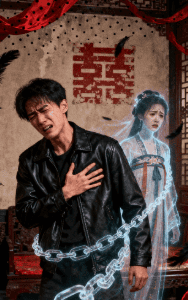
Building Engaging Brand Stories Through Micro-Drama
If you take one practical point from this entire piece, make it this: interruptive advertising is dead in this ecosystem (hallelujah!).
Micro-drama audiences are watching for the story. A pre-roll ad or a jarring product placement breaks the spell instantly. What works (and the case study data is compelling) is narrative integration – in other words, making the product a natural, necessary part of the story world. The brands generating the strongest returns are those committed to engaging brand stories through micro-drama rather than treating it as another slot to buy.
The maturity model that has emerged from practitioners in this space runs roughly as follows:
Level 1 – Observer. Before spending anything, consume the format. Analyse the pacing, the emotional hooks, the types of conflicts that generate engagement. The format has its own grammar, and you need to learn it before you can speak it. (Should be common sense, but just putting it out there).
Level 2 – Tester. Start with low-risk placements: shoppable ads or subtle product appearances in existing series. The goal at this stage is to gather audience data, not conversion.
Level 3 – Co-Creator. Develop formal narrative partnerships with production houses. At this level, the brand is woven into the storyline rather than dropped into it. Key Opinion Leaders (KOLs) are cast as characters, not endorsers.
Level 4 – Fusion. Close the content-to-commerce loop. Integrate live-streaming events and in-app shopping links to convert emotional engagement into immediate transactions. This is where the format’s full-funnel potential becomes visible.
Level 5 – IP Architect. Co-produce your own content where the brand’s identity is built into the series from inception: characters, story world, recurring themes etc. This is long-term brand equity work, and has nothing to do with campaign thinking.
Budgets
Budget is the million $ question if you’ll pardon the pun.
Entry-level involvement with branded product integration into an existing series typically runs from USD 50,000 to 150,000. At this level, your product appears organically within an existing storyline rather than interrupting it. Think of it as buying a well-placed role in someone else’s story. It’s low-risk and a sensible starting point if you are at Level 2 or early Level 3 on the maturity model above.
Commissioning a fully custom series is a different proposition. A 60 to 80-episode modern drama (contemporary setting, everyday locations) typically costs between USD 400,000 and 600,000 to produce. Period or costume dramas with elaborate sets and special effects can run to USD 1.2 million or more. These budgets reflect the industrial scale of production in cities like Zhengzhou and Xi’an – the infrastructure exists precisely to deliver at this volume and speed.
If you are working with individual micro-drama actors or influencers for adjacent promotional content on their own Douyin channels, costs are considerably lower: roughly USD 2,000 to 20,000 per episode depending on the actor’s following and the production complexity involved.
A few factors will shift your costs significantly. Modern, everyday settings are cheaper to film than period pieces. Platform distribution structures vary – Douyin and Kuaishou operate differently from international platforms like DramaBox. And if you are producing content for markets outside China, budget separately for proper localisation: not translation, but genuine cultural adaptation. This is a common and expensive oversight. If we were to link this to the levels of experience I mention above, level 2 sits comfortably in the lower bracket while Level 4 and 5 work require the custom series budget.
One final note: the 10 to 15% performance commission structure I mention later in this piece is additional to these production budgets, not a substitute for them so be sure to factor it in from the start.
Most of this data is from 2025 as I don’t have newer reports available at the time of writing but you should note that, especially at the lower end of the scale, AI is starting to bring costs down so treat this as a guideline.
Who is really succeeding here?
The case studies from brands that have moved up this maturity ladder are striking. Chinese skincare brand Kans invested 50 million RMB in an influencer-led “CEO romance” series and generated 3.34 billion RMB in sales (that’s a 66x return) with 50 billion total views. Cleaning brand Liby used emotionally resonant storylines targeting Gen Z and saw a 341% increase in detergent sales alongside 5x overall sales growth. KFC’s time-travel series exceeded 1.4 billion views and drove measurable uplift in weekend promotions.
These are not flukes, or one off results. They are the result of treating the format seriously as a storytelling medium rather than just a placement opportunity.
Platform selection is a key part of your micro-drama marketing strategy
Platform choice matters enormously, and the distinctions are more nuanced than they perhaps appear from the outside. Not all channels are created equal… When talking about Chinese micro-drama platforms, we’re mostly looking at the same channels as you are familiar with from social selling.
The “Big Three” Ecosystems
The primary distribution channels for micro-dramas in China are the same platforms that dominate social selling:
- Douyin (ByteDance): The Chinese version of TikTok is a leader in both micro-dramas and “content-to-commerce,” launching over 20,000 native short dramas in 2024 alone. It is considered ideal for high-frequency categories like beauty and fashion, and is is the premier space for influencer-driven content, with the highest content-to-commerce conversion rates.
- Kuaishou: This platform was a pioneer in the format, launching “Kuaishou Small Theatre” in 2019. It caters to users who value cost-effectiveness and is frequently used by brands like Vivo and JD.com to spark viral interest in practical products. Dramas here skew toward 3C electronics and household goods, with an audience that prioritises value and practicality over aspirational positioning.
- WeChat (Tencent): Through WeChat Video Accounts, Tencent serves as a major distribution hub. Marketers use these dramas to funnel fans into exclusive private WeChat groups to build loyal communities and offer special promotions. As with other forms of marketing, those private WeChat groups (often called “walled gardens”) are an ideal place for longer-term relationship management.
Platforms Specialized for Transactions
Beyond social media, platforms traditionally known for pure e-commerce have also integrated micro-dramas to drive sales:
- Taobao: Taobao short dramas are described as “highly transaction-driven,” where brands like Lancôme and L’Oréal integrate storylines directly with livestream shopping links to guide viewers to immediate purchases. These promotional storylines with their live-streaming purchase links are best suited for brands already embedded in Alibaba’s ecosystem.
- JD.com: During major shopping festivals, JD.com has used dramas featuring “scan-to-buy” QR codes and AI-powered digital avatars that provide real-time product links as the story unfolds.
- Xiaohongshu (Little Red Book): While currently more limited in its micro-drama volume, its lifestyle-oriented focus makes it a “slow-burn” channel for high-ticket brands aiming to build long-term trust.
For consumer goods brands entering China – & particularly food, beverage, and mother-and-baby categories – your platform decision should follow the audience, not the format. Douyin’s beauty-and-lifestyle ecosystem suits premium FMCG. Kuaishou’s pragmatic user base suits functional household goods. Neither is universally correct – the right choice simply depends on who your target audience is.
Going Global: The Format That Travelled
One development that deserves particular attention from European exporters is the international expansion of the micro-drama model itself. In the first eight months of 2025 alone, China’s overseas micro-drama revenue reached USD 1.525 billion – that’s a massive 194.9% year-on-year increase.
The platform leading this charge is ReelShort, which has achieved something remarkable – higher daily usage in the United States averaging 35.7 minutes per day, compared to Netflix’s 24.8 minutes. Read that again. A Chinese-origin short-drama app is outperforming Netflix on daily engagement in the US market.
The strategic mechanism behind this is what practitioners call “cultural hybridity” or, more vividly, “soul grafting.” Rather than simply dubbing Chinese content into English, ReelShort pairs Chinese directors (who have mastered the pacing and emotional architecture of the format) with Western writers and actors. Chinese narrative tropes are swapped for culturally resonant Western equivalents: so warlords become werewolves, clan rivalries become corporate dynasties, arranged marriages become billionaire romances etc.
The core demographic for these overseas adaptations is Western women aged 35 to 65, who engage with the content as what one industry observer aptly described as “digital snacks.” You can see the emotional mechanics are universal even when the cultural context changes.
For European brands, this globalisation trajectory creates a secondary opportunity as well because the micro-drama format itself may come to your market sooner than you expect (there have been individual creators experimenting with this in a small way on YouTube for some time now already). Brands building fluency in narrative integration now will be better positioned when the format arrives in Europe at scale.
AI and the Production Revolution
No serious analysis of micro-dramas in 2026 is complete without addressing the role of artificial intelligence in reshaping how this content is made.
AI-generated content on Douyin grew from 0.08% of micro-drama titles to 28.5% in just 16 months. Tools like Moke (Moke is an AI production tool developed by Versatile Media, a virtual production company based in Hangzhou) are compressing production cycles from weeks to days – tasks that previously required five people over two weeks can now be completed by two people in three days. The industry has shifted, in the words of researchers studying it, from “artistic creation” to “creative manufacturing.”
Platforms are using big data to modularise storytelling – identifying which emotional beats, character archetypes, and plot structures generate the highest engagement, then building production pipelines around those templates. It’s a fundamentally different creative approach compared to traditional content production, and it explains how the industry manages to output approximately 3,000 new titles per month.
There are, however, genuine risks for brands operating in this space. The “AI feel” – you know, that subtle visual uncanniness that you can detect as an attentive viewer – remains a hurdle for premium brand associations. Character consistency across episodes is technically imperfect and AI-generated characters can appear to age or change between scenes in ways that undermine the narrative credibility.
The legal dimension is the most acute risk though. A 2026 Beijing court ruling established that if a real actor can be recognised in an AI-generated image, the producer is liable for portrait rights violations and crucially, the brand is liable even if the resemblance is accidental rather than deliberate. Any brand working with AI-assisted production needs explicit legal review of this exposure before signing off on content. (Of course that means there are opportunities for actors to licence their images, voices etc but this duanju marketing guide is aimed at companies looking to tell engaging brand stories through micro-drama.)
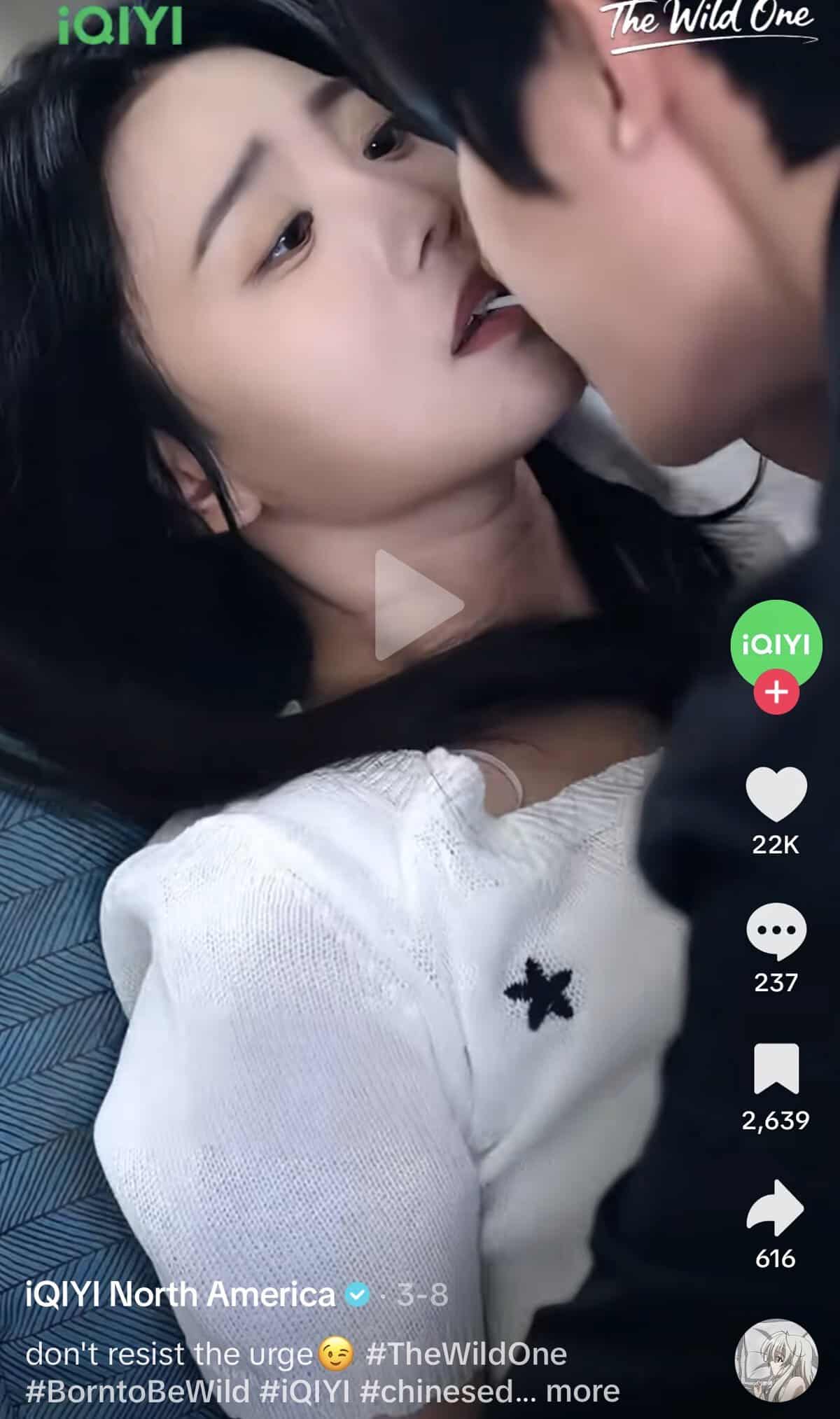
What This Means for Your Export Strategy
Let me talk about the practical implications, because this is where most of the international commentary on micro-dramas loses the thread. There is no shortage of analysis of the format itself, but what IS in shorter supply is a clear-eyed view of how marketing strategies using micro-drama translate into action for brands outside China.
Here are six things worth acting on.
First: don’t wait for perfect conditions. The regulatory framework is now stable enough for serious brand investment. The platforms are mature & production infrastructure is sophisticated. Brands that enter now are learning the format while it is still accessible, whereas if you wait you could find yourself paying a premium to catch up.
Second: budget for narrative, not placement. If your China marketing budget is currently allocated primarily to banner ads, KOL endorsements, and live-streaming appearances, you should be having a conversation with your agency about reallocating a portion toward micro-drama narrative integration. The ROI case studies show quite dramatic (sorry for the pun) results. A coherent micro-drama marketing strategy is no longer a nice-to-have for brands serious about China but is fast becoming the baseline expectation.
Third: choose your platform before choosing your format. The common mistake is to decide “we want to do micro-dramas” and then ask which platform to use. The correct sequence is to start with your target consumer segment, map that to the platform where they spend their time, and then develop content appropriate to that platform’s conventions.
Fourth: apply a 10-to-15% commission base with tiered performance bonuses when working with creators and production partners. This structure aligns creator incentives with actual sales outcomes rather than vanity metrics, and it is becoming the industry standard for serious brand partnerships (& obviously you need to budget for it).
Fifth: watch the AI legal landscape carefully. The Beijing portrait rights ruling is likely to be the first of several legal clarifications in this space. Build compliance review into your production workflow from the start rather than retrofitting it later or just crossing your fingers that nothing will go wrong.
Sixth: if your category is food, beverage, or mother-and-baby, lean into the “Micro-Drama Plus” content priorities. A baby formula brand associated with rural revitalisation storytelling, or a premium food brand integrated into a cultural heritage series, benefits from both narrative authenticity and regulatory tailwind. These are not the fluffy advantages they might appear at first glance but actually translate into platform distribution and algorithmic visibility.
Seventh: treat your distributor as your micro-drama gateway, your extended team – not an afterthought. Most European brands entering China are doing so through a local distributor, not a dedicated China team. That distributor is often the single most important factor in whether any micro-drama strategy actually happens because they hold the platform relationships, the production contacts, and the on-the-ground judgement about which content approach fits your category and price point. If micro-drama is not part of your distributor briefing and partner selection criteria, you are effectively leaving the decision to chance. (Believe me, if you don’t proactively answer how you want your distributor to deal with this kind of question, many will simply do what they see fit and that rarely matches your brand approach.)
This also answers the question of how you bridge from Level 2 to Level 3 on the maturity model above. Finding a credible production house in Zhengzhou or Xi’an is anything but straightforward if you have no existing China network, but a well-connected distributor will already have those relationships, or know the agency that does. For brands without that network yet, the routes in are a China-specialist trade agency, an introduction through your industry’s trade body, or platforms like CIFTIS or the Canton Fair where production partners actively seek brand collaborations. The point is: don’t try to navigate this cold. The right local partner makes the difference between a micro-drama strategy that exists on paper and one that actually touches consumers.
Can I really make an impact engaging micro-drama for brand strategy?
There is a legitimate sceptic’s view here, and I want to address it directly. The micro-drama market produces approximately 3,000 titles per month, of which the vast majority fail to find a significant audience. The industry’s own researchers describe it as “vast forests producing only a tiny bit of coal.” The hit rate is low meaning that you need to be strategic in order to generate your desired ROI. The format is addictive precisely because it is engineered to be, which raises questions about long-term sustainability of audience attention at current levels.
These are totally valid concerns as is the bubble question. What I would say is this: even if the format reaches saturation and consolidates downward, the underlying shift in consumer behaviour – towards vertical, mobile, fragmented-time content consumption – is structural rather than cyclical. The specific platforms and formats will evolve for sure. The fundamental orientation of the Chinese consumer toward this kind of content is unlikely to reverse.
For international brands, the practical implication is the same regardless of whether you are a believer or a sceptic. You need to understand how this ecosystem works if you’re serious about the Chinese market. You don’t have to be a micro-drama maximalist to benefit from that understanding.
Just think how many European companies wrote off livestreaming as a new form of “telly selling” and expected it to be a short lived pandemic hype…they’re laughing on the other side of their faces now.
A Final Thought
I have spent thirty years helping brands navigate the complexity of selling into new markets, and the pattern I see repeated most often is this: the formats and channels that generate the most scepticism among Western brand managers are frequently the ones that matter most to the consumers they are trying to reach in China.
Micro-dramas are generating a lot of scepticism right now. 700 million viewers and over 100 billion RMB in projected revenue suggest that scepticism is, at minimum, worth examining carefully.
The question worth sitting with is not “are these silly little videos really important?” The question is: “what is my brand’s micro-drama marketing strategy for the markets where this format now commands more daily screen time than Netflix-type platforms?”
That is a rather more urgent question.
Thinking that working with a consultant would accelerate your international expansion?
If you’d like to learn more about working with me for support on your internationalisation projects or personal export knowledge, you can book a 30 minute international clarity call here.
If you haven’t already signed up for my free e-book about how to select which international market to enter next, you can do so here, or using the form below.
If you enjoyed this content please share it on social media or recommend it to your network.
Pin this post for later!

Kathryn firmly believes that business is done between people, and therefore places her focus on building strong relationships that form a solid foundation for doing business.
When she's not travelling around the world, Kathryn enjoys playing clarinet in her town's wind orchestra or sharing her love of the outdoors with her Scout group.


This is a useful framing of micro-dramas as a format problem, not only a content trend. The part about title and episode packaging is especially important for English-language discovery, where the same short drama can appear under multiple translated titles and viewers lose the thread quickly.